If you have limited mobility, are recovering from an illness, or simply have not exercised in a while, it is natural to feel unsure about where to start. Chair exercises are a great answer. They build strength, flexibility, and circulation without the worry of losing your balance, and they can be done almost anywhere.
Staying active matters at every ability level. Moving regularly helps maintain muscle strength, keeps joints comfortable, and supports mood and energy. The CDC encourages older adults to be as physically active as their abilities and conditions allow, and reminds us that some physical activity is better than none at all.
Below is a simple seated routine you can do in about 15 minutes. For the bigger picture on staying strong as you age, see our guide to exercise for longevity.
Setting up safely
- Check with your doctor before starting, especially if you have not been active for a while or have a health condition.
- Use a sturdy chair without wheels. A chair without arms gives you more room to move.
- Sit so your feet rest flat on the floor with your knees bent at about a right angle.
- Sit tall, slightly away from the backrest, unless an exercise says otherwise.
- Wear loose, comfortable clothing and keep water nearby.
- Move within a comfortable range, and stop if you feel pain, dizziness, or unusual shortness of breath.
These guidelines follow the NHS sitting exercise guidance, which also includes several of the moves below.
A 15-minute chair exercise routine
Warm up: seated marching
Sit tall and hold the sides of the chair. Lift one knee as far as is comfortable, then lower the foot with control. Alternate legs at an easy pace for one to two minutes to warm up your hips and get your blood flowing.
1. Ankle pumps
Straighten one leg with the foot just off the floor. Point your toes away from you, then pull them back toward you. Do two sets of five with each foot. This helps circulation and keeps ankles flexible.
2. Seated knee extensions
Slowly straighten one knee until your leg is out in front of you, hold for two to three seconds, then lower it with control. Do 10 on each leg to strengthen the thigh muscles you use to stand and climb stairs.
3. Arm raises
Sit with your arms at your sides, palms facing forward. Raise both arms out to the sides and up as far as is comfortable, keeping your shoulders down, then lower them slowly. Breathe out as you raise your arms and in as you lower them. Repeat five times.
4. Seated bicep curls
Hold a light dumbbell or a water bottle in each hand, elbows at your sides and palms facing up. Bend your elbows to bring the weights toward your shoulders, then lower slowly. Do 10 repetitions to build the arm strength used for carrying and lifting.
5. Seated upper body twist
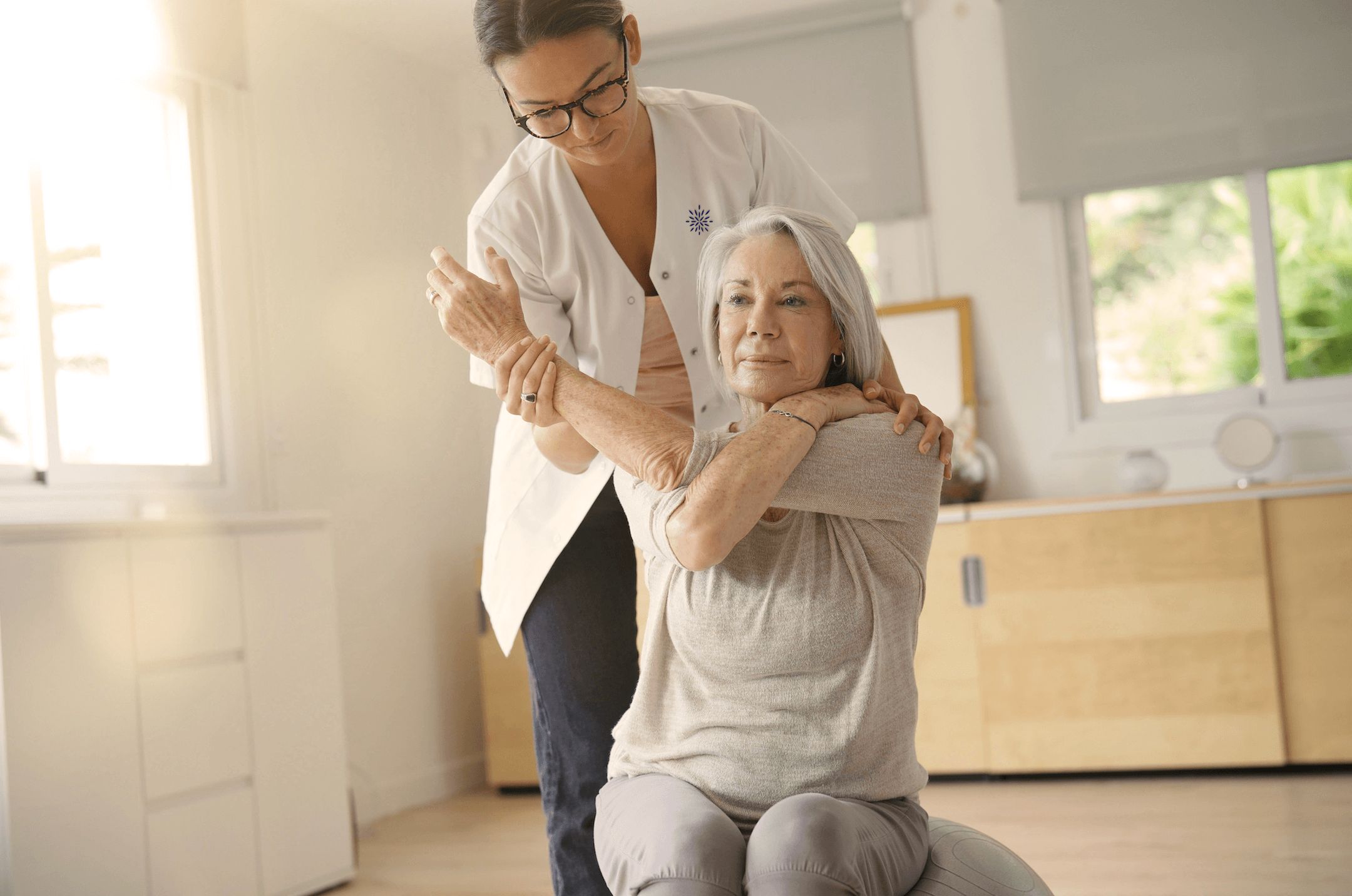
Cross your arms and rest your hands on your shoulders. Keeping your hips still, turn your upper body to the left as far as is comfortable and hold for five seconds, then turn to the right. Repeat five times on each side.
6. Chest stretch
Sit tall, away from the back of the chair. Draw your shoulders back and down, extend your arms out to the sides, and gently lift your chest until you feel a stretch across the front. Hold for five to 10 seconds and repeat five times. This helps counter the rounded posture that comes with long hours of sitting.
7. Neck rotations
Look straight ahead with your shoulders relaxed. Slowly turn your head toward your left shoulder as far as is comfortable, hold for five seconds, then return to center and turn to the right. Repeat three times on each side.
8. Sit-to-stand
If you are able to stand, finish with this strength builder. Sit toward the front of the chair, feet flat, and stand up, using your hands on the armrests or your thighs at first if you need to. Sit back down slowly. Start with three to five repetitions. Over time, aim to stand without using your hands.
How often to do chair exercises
Aim for at least two sessions a week and build up slowly from there. The CDC recommends muscle-strengthening activity on at least two days a week for adults 65 and older, and a regular chair routine is a comfortable way to meet that goal. As the routine gets easier, add repetitions, hold stretches a little longer, or use slightly heavier weights.
Make it social
Some people prefer to exercise alone, but if you enjoy company, a seated exercise class or a regular session with a friend makes movement more fun and helps you stay consistent. Exercising together is also a natural way to make new friends.
Ready for more?
Once seated exercises feel comfortable, adding a few standing moves is a natural next step. Our guide to balance exercises for seniors includes simple options you can do while holding a counter or chair.
Staying active at Ciela
At Ciela's Vitality Center, residents of every mobility level can exercise with support, including physical therapy, personal training, yoga, tai chi, and barre. Our hydrotherapy pool offers a gentle, low-impact option for anyone with joint pain or arthritis, and our activities and excursions make staying active part of everyday life.
Ciela in Pacific Palisades, CA, is a boutique luxury senior living community offering independent living, assisted living, memory care, and short term stays. Contact us to arrange a personalized tour.
Frequently asked questions
Are chair exercises effective for seniors?
Yes. Chair exercises build strength, flexibility, and circulation, and they are a safe starting point for people with limited mobility or balance concerns. Done regularly, they make everyday tasks like standing up and carrying things easier.
How long should a chair workout be?
Ten to 20 minutes is a good range. If that feels like too much, start with five minutes and add a little more each week.
Can chair exercises help with balance?
They help indirectly by strengthening the legs and core, which support balance. To train balance directly, add standing exercises next to a sturdy support once you are ready.
What kind of chair is best for chair exercises?
A stable chair without wheels, ideally without arms, at a height that lets you sit with your feet flat on the floor and your knees bent at about a right angle.
This article is general information and not medical advice. Check with your doctor before starting a new exercise routine, especially if you have a health condition.
California RCFE license #198320375