Good balance is what lets you step off a curb, turn to answer the door, or catch yourself on an uneven sidewalk without a second thought. It is also one of the abilities that fades quietly with age, and one of the easiest to rebuild with a few minutes of practice a day.
Falls are common and they matter. According to the CDC, more than one in four older adults falls each year, and falls are the most common cause of traumatic brain injuries in older adults. The encouraging part is that two of the risk factors the CDC lists, difficulty with walking and balance and lower body weakness, are things you can change. That is why the CDC's activity guidelines for adults 65 and older include balance activities alongside aerobic and strength exercise.
Below are eight simple balance exercises you can do at home, plus how to stay safe and how to progress. For the bigger picture on strength, cardio, and balance working together, see our guide to exercise for longevity.
Before you start: safety first
- Check with your doctor or physical therapist first, especially if you have fallen recently, feel dizzy, or have a condition that affects your bones, joints, or muscles.
- Practice next to a kitchen counter, a heavy table, or a sturdy chair you can hold onto.
- Wear supportive, non-slip shoes and clear the space around you.
- Start with both hands on your support, then move to one hand, then fingertips, as you feel steadier.
- Stop and rest if you feel dizzy, unsteady, or in pain.
8 balance exercises for seniors
1. Weight shifts
Stand with your feet hip-width apart and your weight even on both legs. Shift your weight to one side and lift the opposite foot slightly off the floor. Hold for up to 30 seconds, then return to center and switch sides. Mayo Clinic suggests increasing the number of repetitions as your balance improves.
2. Single-leg stand
Holding your support, lift one foot and bend that knee slightly behind you. Hold for up to 30 seconds, then switch legs. As this gets easier, use one hand, then just your fingertips. A simple way to build the habit is to practice while brushing your teeth or waiting for the kettle.
3. Heel-to-toe walk
Walk in a straight line, placing the heel of one foot directly in front of the toes of the other with each step. Look ahead rather than at your feet. Start with 10 steps alongside a wall or counter you can touch if needed, and build to 20.
4. Sit-to-stand
Sit toward the front of a sturdy chair with your feet flat. Stand up, ideally without using your hands, then sit back down slowly and with control. Start with 5 to 10 repetitions. This builds the leg strength that helps you recover from a stumble, and it is one of the most useful movements for staying independent.
5. Heel raises
Hold your support and rise slowly onto your toes, then lower your heels back down with control. Repeat 10 times. Stronger calves and ankles make it easier to steady yourself on uneven ground.
6. Side leg raises
Stand tall holding the back of a chair. Lift one leg out to the side, keeping your toes facing forward and your upper body upright, then lower it slowly. Do 10 on each side to strengthen the hip muscles that keep you stable when walking.
7. Single-leg stand with head turns
Once a single-leg stand feels steady, add slow head turns from side to side or up and down while you hold your support. Changing what your eyes see while you balance trains the inner ear and the sense of where your body is in space, which work together when you recover your footing.
8. Walking with direction changes
Walk across a clear room and practice gentle turns, stops, and changes of direction, or walk while alternating a slower and a slightly brisker pace. Everyday life rarely asks us to walk in a perfectly straight line, and this kind of practice prepares the body for real-world movement.
How often to practice
A few minutes most days works better than one long session a week. Many people fold balance work into daily routines: a single-leg stand at the sink, heel raises while the coffee brews, or a heel-to-toe walk down the hallway. Pair it with strength exercise on at least two days a week, as the CDC recommends, since stronger legs and a stronger core make balance easier to hold.
How to progress safely
- Hold each position a little longer
- Use less hand support, moving from two hands to one, then fingertips
- Add more repetitions
- Add gentle movement, such as head turns or arm reaches, while you balance
Progress one change at a time, and always keep your support within reach.
Classes that build balance
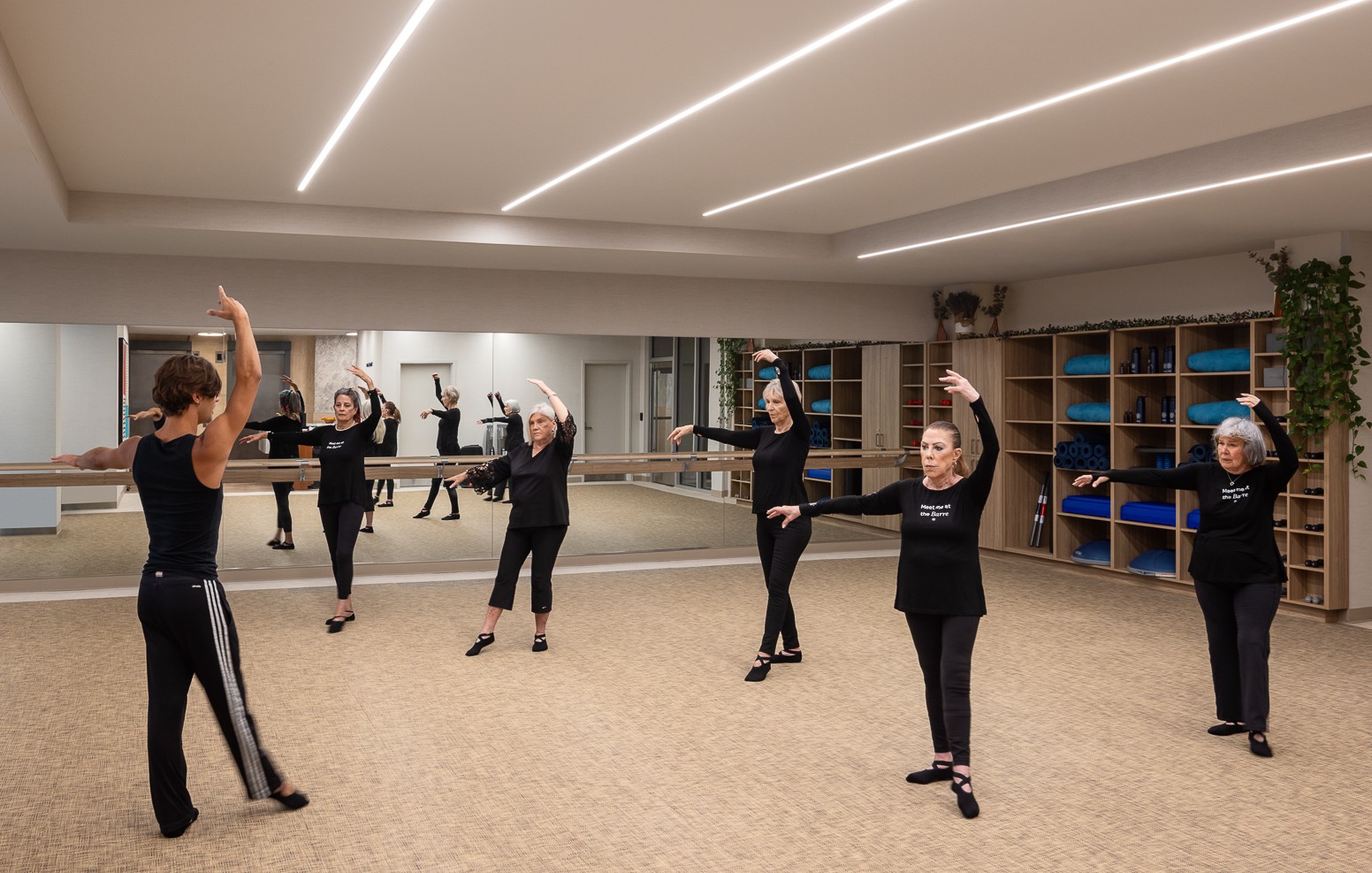
Group classes are a great way to make balance practice stick. Tai chi, which uses slow and flowing movements, is often recommended for balance, and Mayo Clinic notes that learning from a teacher who can give feedback makes it easier to perform the movements correctly. Yoga and barre also build steadiness and posture, and exercising with others adds encouragement and accountability.
When to work with a professional
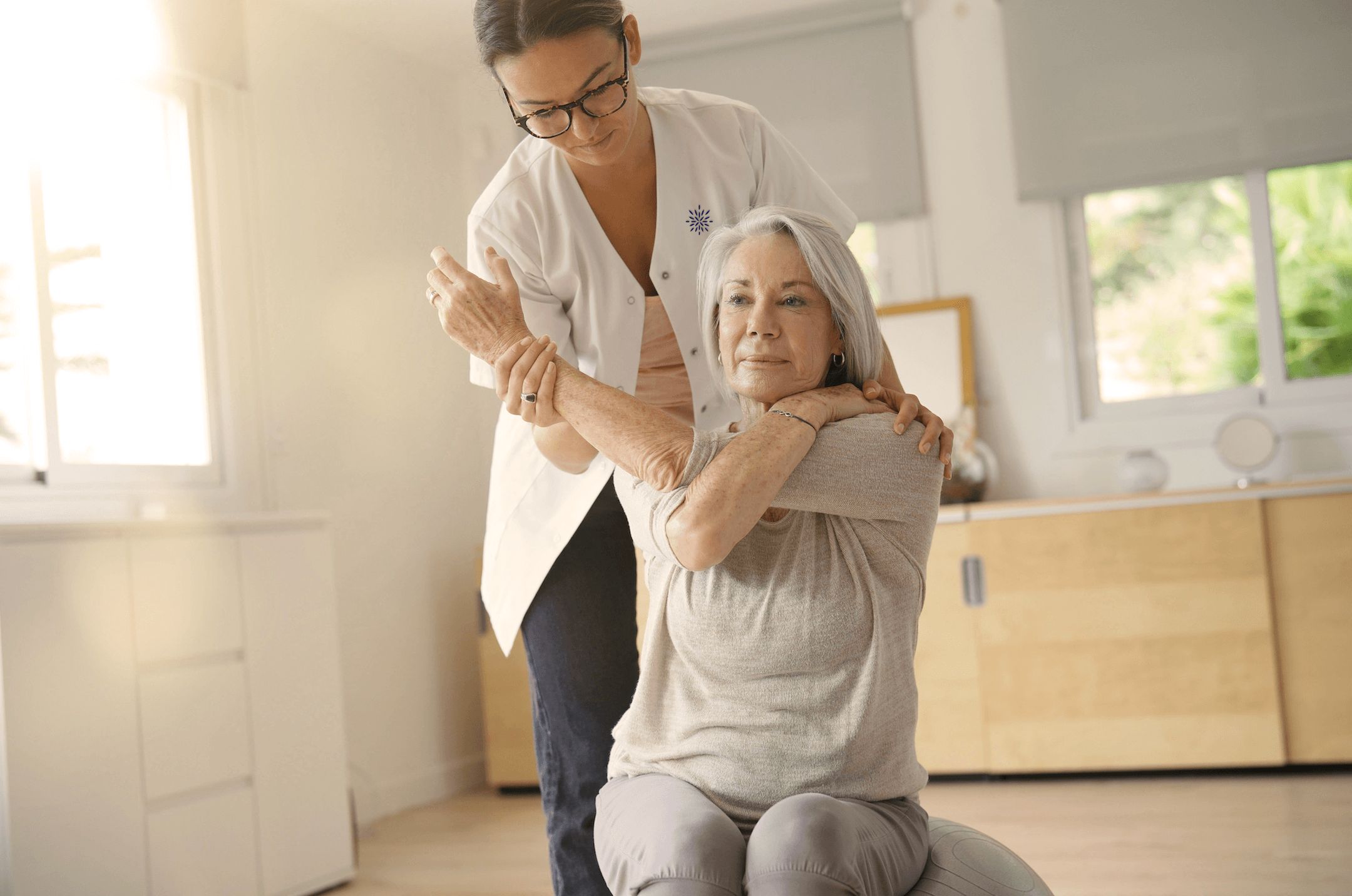
A physical therapist can assess your balance and build a plan around your specific needs. That is especially helpful if you have fallen before, use a cane or walker, feel unsteady when turning, or live with a condition such as Parkinson's. Our guide to fall prevention for seniors with Parkinson's covers home safety changes that help too.
Balance and movement at Ciela
At Ciela's Vitality Center, residents work with physical therapists and personal trainers and join classes such as yoga for balance, barre for posture, and tai chi. Our hydrotherapy pool and underwater treadmill offer a low-impact way to build strength and steadiness, and our Parkinson's program focuses on mobility and balance for residents living with Parkinson's.
Ciela in Pacific Palisades, CA, is a boutique luxury senior living community offering independent living, assisted living, memory care, and short term stays. Contact us to arrange a personalized tour.
Frequently asked questions
What is the best balance exercise for seniors?
There is no single best exercise. A mix works well: single-leg stands and weight shifts for static balance, heel-to-toe walking for dynamic balance, and sit-to-stands and heel raises for the leg strength that supports both.
How often should seniors do balance exercises?
A few minutes most days is a good goal. Short, frequent practice builds steadiness more reliably than occasional long sessions, and many exercises fit easily into daily routines.
Can balance improve at any age?
Yes. Balance responds to practice at any age, and many people notice they feel steadier after a few weeks of regular exercise.
What exercises help older adults prevent falls?
Balance and strength exercises help most, including standing on one foot, heel-to-toe walking, gentle leg strengthening, and practices like yoga and tai chi that build coordination and core stability. These make everyday movements safer.
Is walking good for balance?
Yes. Walking keeps the legs strong and the body used to shifting weight, and adding turns, pace changes, or a heel-to-toe section makes it even more effective for balance.
This article is general information and not medical advice. Talk with your doctor or physical therapist before starting new exercises, especially if you have fallen or have a health condition.
California RCFE license #198320375