

.svg)


For decades, exercise recommendations for older adults emphasized safety above all else. Walking was encouraged. Light activity was considered sufficient. Strength training and balance work were often treated as optional.
We now understand that this approach misses something essential.
Exercise is one of the most powerful tools available to extend not just lifespan, but health span — the number of years lived with strength, independence, and cognitive vitality. As people age, the greatest threats to independence are rarely sudden illness. More often, they are gradual losses in muscle mass, cardiovascular capacity, balance, and coordination.
These changes are not inevitable consequences of aging alone. They are, to a large degree, the result of reduced physical stimulus. When the body is no longer challenged, it adapts by becoming less capable.
The goal of exercise later in life is not performance. It is preservation of capacity — the strength to stand easily, the endurance to walk confidently, and the balance to move safely through an unpredictable environment.
The Shift From Lifespan to Health Span
Adding years to our life is no longer the primary challenge. We must also add life to our years.
Loss of muscle mass, declining aerobic fitness, and impaired balance increase fall risk, reduce resilience during illness, and accelerate both physical and cognitive decline. Exercise directly addresses each of these mechanisms:
• Strength training preserves muscle and bone.
• Cardiovascular training maintains heart and brain health.
• Balance and coordination training reduce fall risk.
• Regular movement supports metabolic and cognitive function.
The most useful question becomes: what physical capacity will be required in the final decade of life? Starting to exercise earlier, and continuing to do so as we age, helps preserve that capacity.
Why Strength Training Matters More With Age
After age 50, muscle mass declines steadily unless it is actively maintained. This process, known as sarcopenia, is strongly associated with frailty, falls, and loss of independence.
Strength training slows or reverses this process.
The goal is not maximal strength or fatigue. Instead, strength training supports the movements required for daily life:
• Standing up from a chair
• Climbing stairs
• Carrying objects safely
• Recovering balance during a misstep
• Protecting joints during movement
Lower-body strength and core stability are particularly important because they determine mobility and balance recovery. Strength, in this context, is less about lifting heavier weights and more about maintaining control over one’s own body.
Cardiovascular Fitness and the Aging Brain
Cardiovascular fitness remains one of the strongest predictors of longevity and cognitive health. Aerobic activity improves circulation, supports metabolic health, and increases blood flow to the brain.
For older adults, cardiovascular exercise does not need to be extreme. The most effective forms are sustainable and low-impact:
• Brisk walking
• Cycling
• Swimming
• Any other movement that moderately raises heart rate
Maintaining aerobic capacity helps preserve endurance, supports mood regulation, and reduces risk of cardiovascular disease and cognitive decline.
Cardio is not only heart training — it is brain preservation.
Why Balance and Proprioception Become Critical With Age
Falls are one of the leading causes of injury and hospitalization among older adults. Importantly, falls are rarely caused by weakness alone.
They are often the result of declining proprioception — the body’s ability to sense position and movement — combined with slower reaction time and reduced joint stability.
With aging:
• Sensory feedback from joints and feet declines
• The vestibular system becomes less sensitive
• Reflexes slow
• Muscles respond less quickly to loss of balance
Strength alone does not solve this problem. The nervous system must also be trained.
Exercises that challenge balance, coordination, and spatial awareness help maintain the brain-body connection that allows someone to recover from a stumble or unexpected movement. Training balance proactively is one of the most effective ways to reduce fall risk.
Examples of Balance and Proprioception Training
Balance is not a single skill. It involves vision, inner ear function, joint awareness, strength, and reaction speed working together. The most effective exercises challenge more than one of these systems at the same time.
The following examples train the body to recover from instability and maintain control during real-world movement.
• Tandem Walking (Heel-to-Toe Walking)
• Single-Leg Stand with Reach
• Direction Changes While Walking
Five Essential Exercises for Health Span and Fall Prevention
The following exercises address strength, cardiovascular health, balance, and proprioception simultaneously. They reflect movement patterns used in everyday life and can be adapted to different ability levels.
1. Sit-to-Stand (Chair Squat)
From a seated position, stand up without using the hands if possible, then sit back down slowly and under control.
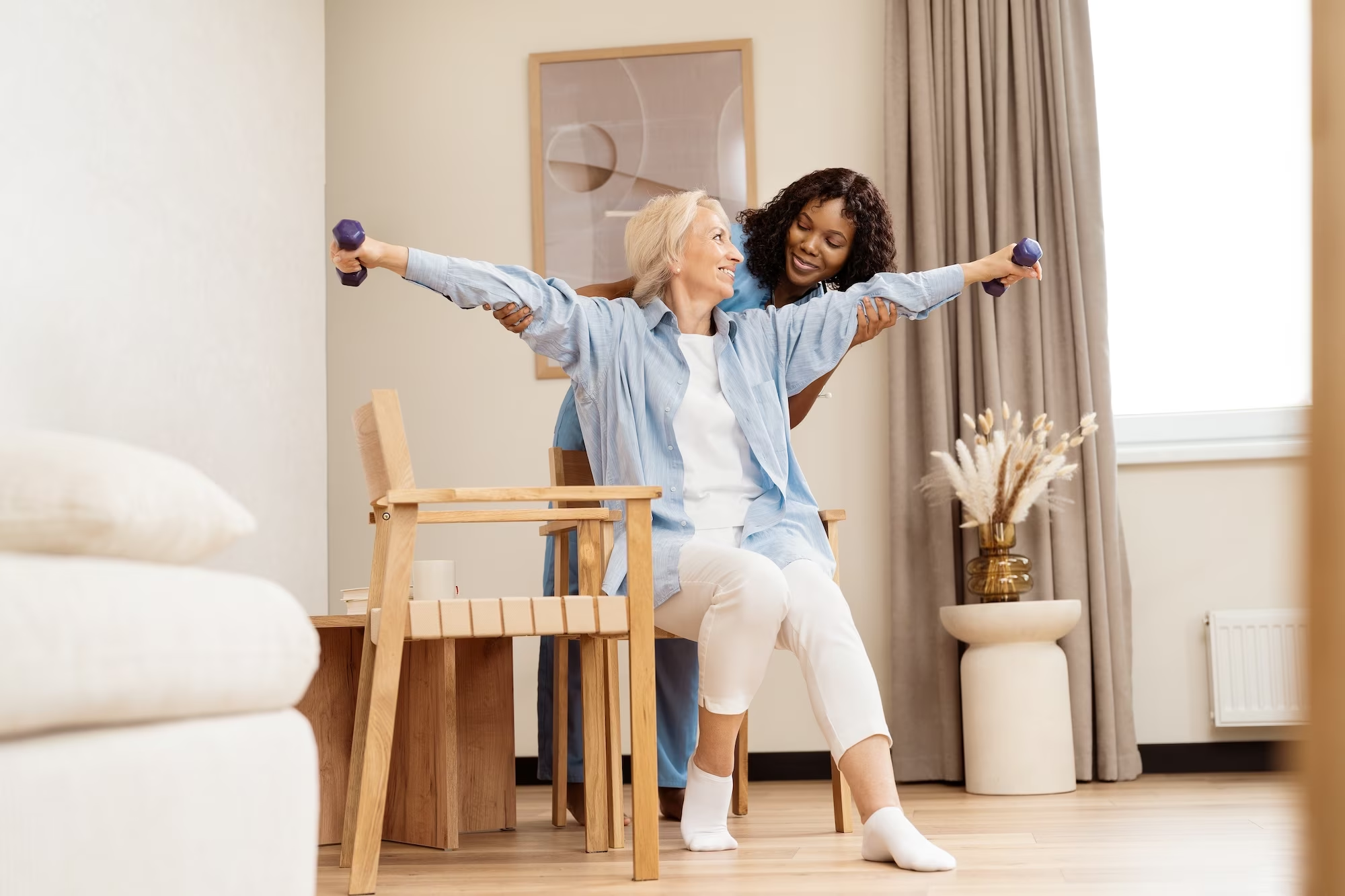
This movement strengthens the quadriceps and glutes while reinforcing one of the most important functional skills for independence. The controlled lowering phase improves balance and joint stability. Progression can include holding light weights or slowing the descent.
2. Step-Ups
Step onto a low platform or stair with one foot, bring the other foot up, and step down slowly.
Step-ups build leg strength while training single-leg balance and coordination. Because daily movement often occurs one leg at a time, this exercise improves stability and reduces fall risk. Difficulty can be increased gradually by raising step height or adding light resistance.
3. Farmer’s Carry
Walking while carrying moderate weights at the sides strengthens grip, core stability, and posture.
This exercise trains the body to stabilize while moving, which closely mirrors real-world demands such as carrying groceries or luggage. It also improves gait mechanics and balance under load, making it highly protective against instability.
4. Single-Leg Balance with Head Turns
Standing on one leg while slowly turning the head side to side or up and down challenges balance systems simultaneously.
This exercise trains proprioception and vestibular function by forcing the body to stabilize while visual input changes. Performing it near a support surface allows safety while still challenging coordination.
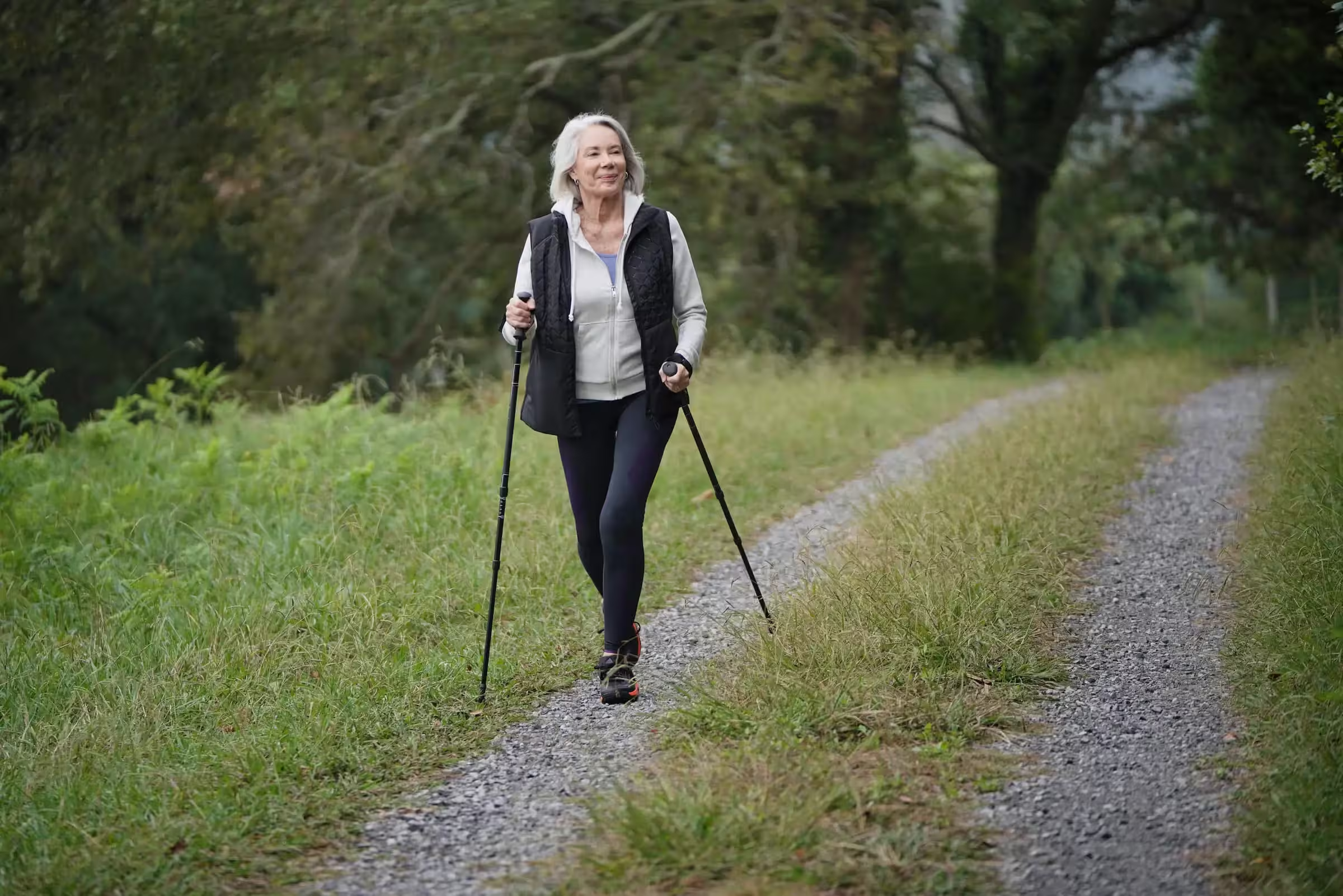
5. Brisk Walking with Variable Pace
Alternating between comfortable walking and slightly faster intervals improves cardiovascular fitness while maintaining joint safety.
Changing pace teaches the nervous system to adapt stride length and rhythm, improving gait adaptability and reducing fall risk. This type of walking also supports metabolic and cognitive health.
Exercise as the Foundation of Independence
Exercise in later life is not about performance or appearance. It is about maintaining the ability to participate fully in life — to move confidently, think clearly, and remain independent.
When strength, cardiovascular fitness, and balance are trained together, older adults retain the physical capacity to meet the demands of everyday life. The outcome is not simply longer life, but better years within it.
Aging does not require slowing down. With the right kind of training, it means continuing to live well.



.svg)



