.svg)


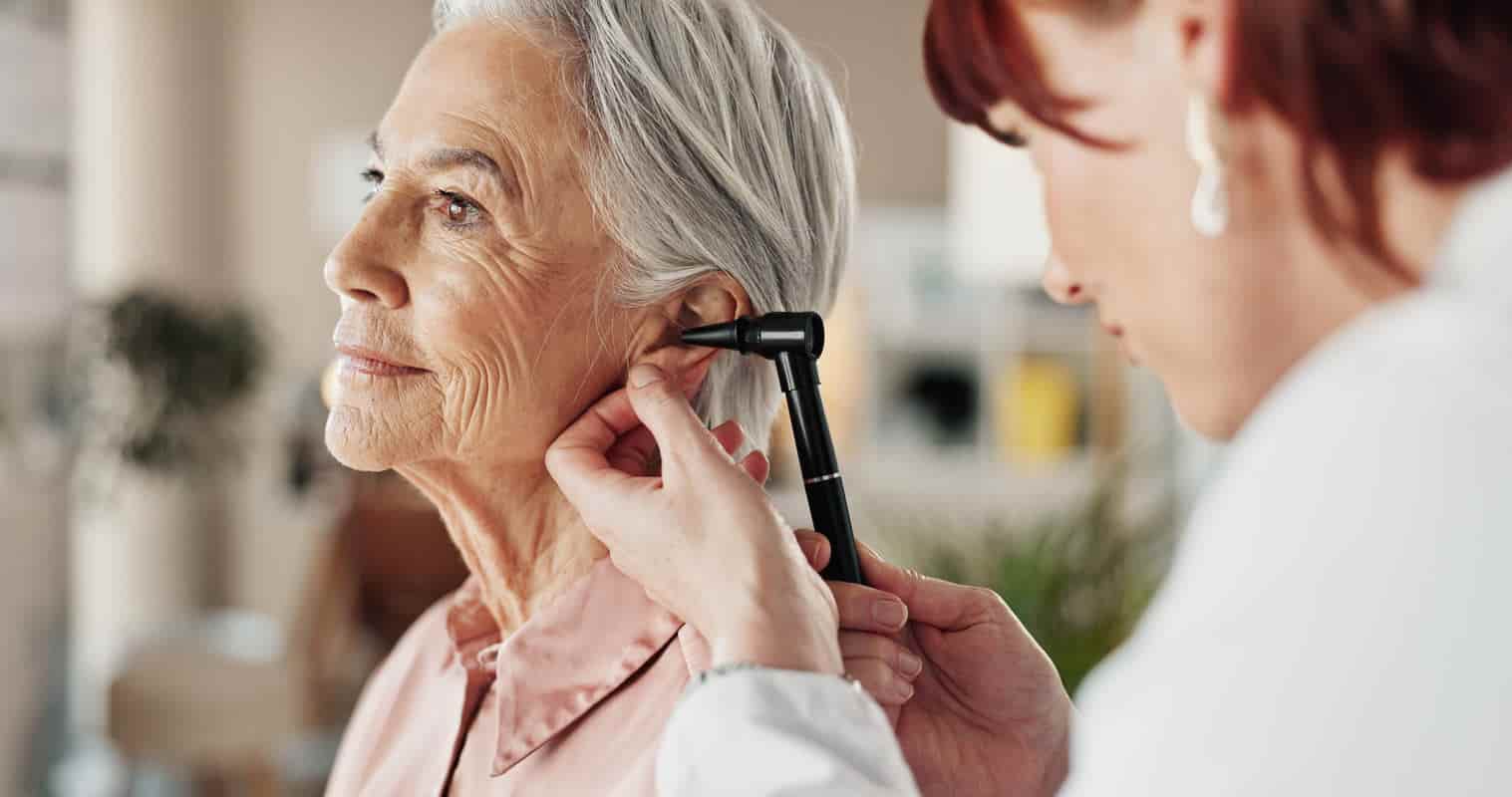
Ask most people about hearing loss and they'll describe an annoyance. The TV creeps louder every year. Restaurant conversations turn into guesswork. "What?" becomes the most-used word at family dinners.
What rarely comes up is the brain. Yet over the past decade, hearing has moved to the center of the conversation about dementia prevention, and for a surprising reason: of all the dementia risk factors a person can actually change, untreated hearing loss may be the biggest one.
If you're caring for an aging parent or simply thinking ahead about your own health, that's worth a closer look. The good news? This is one risk factor families can actually do something about.
What the Research Shows
The Lancet Commission on Dementia, whose reports are considered the benchmark for dementia prevention research, ranks hearing loss at the top of its list of modifiable risk factors. By the Commission's estimate, roughly 8% of dementia cases around the world trace back to it.
Individual studies paint a similar picture. Adults with untreated hearing loss develop dementia at close to twice the rate of adults who hear normally, and the risk grows as hearing worsens. In 2023, a major national aging study reported that dementia was substantially more common among adults over 65 with moderate to severe hearing loss than among their normal-hearing peers, a gap of more than 60 percent.
Findings like these have now been repeated in large studies across the U.S. and Europe, some following participants for decades.
Why Would Hearing Affect the Brain?
No one has a complete answer yet. But three explanations keep showing up in the research, and they probably work together.
The brain works overtime. When damaged inner-ear cells send fuzzy, incomplete signals upward, the brain has to reconstruct what was said. Every conversation becomes a puzzle. That effort pulls resources away from memory. You can't file away what someone told you if all your energy went into figuring out what they said in the first place.
Quiet regions shrink. Brain imaging studies have linked untreated hearing loss to faster atrophy in the regions that process sound and language. Hearing pathways stay healthy through use, and when they fall silent, nearby memory structures appear to suffer along with them.
People pull back. This one is easy to picture. When hearing gets hard, the dinner party stops being worth the strain. Phone calls get shorter, then rarer. A once-talkative parent sits at the edge of the family gathering, smiling but not really there. Isolation is a dementia risk factor in its own right, and hearing loss produces it so gradually that families often miss it happening. If a loved one is already living with memory loss, hearing trouble can make communication even more challenging, compounding the frustration on both sides of the conversation.
The Encouraging Part: Treatment Appears to Help
Here's where the story turns hopeful. The ACHIEVE study, published in 2023, was the first large randomized trial to test whether treating hearing loss could protect thinking and memory. Among older adults already at higher risk for cognitive decline, participants fitted with hearing aids and given audiology support saw their rate of decline cut nearly in half over three years compared with the untreated group.
Dr. Frank Lin, the Johns Hopkins researcher who led the trial, has made the practical case plainly: hearing treatment poses no real health risk, improves daily communication regardless, and may protect the brain on top of it. There aren't many interventions in medicine with that profile.
Other work points the same direction. A 2023 meta-analysis in JAMA Neurology found slower cognitive decline among people who used hearing aids or cochlear implants than among people with similar hearing loss who went without.
Signs It May Be Time for a Hearing Check
Hearing loss sneaks in slowly, which is why the average person waits seven to ten years before treating it. Worth watching for, in yourself or a loved one:
- Asking others to repeat themselves, especially in groups
- TV or radio volume that others find loud
- Trouble following conversation over background noise
- Feeling worn out after social events that used to be fun
- Avoiding phone calls or gatherings that were once routine
A hearing evaluation takes under an hour, doesn't hurt, and is typically covered by Medicare when a physician orders it. Few health appointments offer this much potential payoff for this little effort.
And if you're noticing memory changes alongside hearing trouble, don't panic - but don't wait, either. Understanding how dementia typically progresses can help you tell the difference between a hearing problem masquerading as confusion and something that deserves a doctor's attention. Sometimes it's both, and both are treatable concerns.
How Ciela Supports Hearing and Brain Health
At Ciela, we believe this season of life should be filled with new opportunities. Brain health isn't one intervention. It's the accumulation of daily life - good conversation, movement, music, learning, laughter - repeated over years.
You can see that belief in the details of our Pacific Palisades community. Dining venues include intimate seating where residents can talk without shouting over a crowded room. Common spaces are designed with acoustics and lighting that make conversation easier rather than harder. And a full calendar of lectures, live performances, fitness classes, and resident-led clubs gives residents daily reasons to stay socially and mentally engaged - the very habits research keeps connecting to healthier aging, from staying active to getting quality sleep.
In our assisted living and memory care, our team works alongside families and outside audiologists to keep hearing health part of each resident's personalized wellness plan. A well-fitted hearing aid sounds like a small thing. In practice, it can be the difference between a resident sitting on the sidelines and a resident fully back in the life of the community.
One Last Thought
The ears turn out to be a doorway to the mind. Keeping that doorway open - through a hearing check, a hearing aid, or simply a community where conversation comes easily - is one of the most practical steps a family can take for long-term brain health.
If someone you love has been putting off a hearing test, the research offers a good reason to stop waiting. And if you'd like to see how Ciela weaves connection into everyday life, come visit us in Pacific Palisades. Schedule a tour or call (213) 786-3006 - we'd love to show you around.