

.svg)


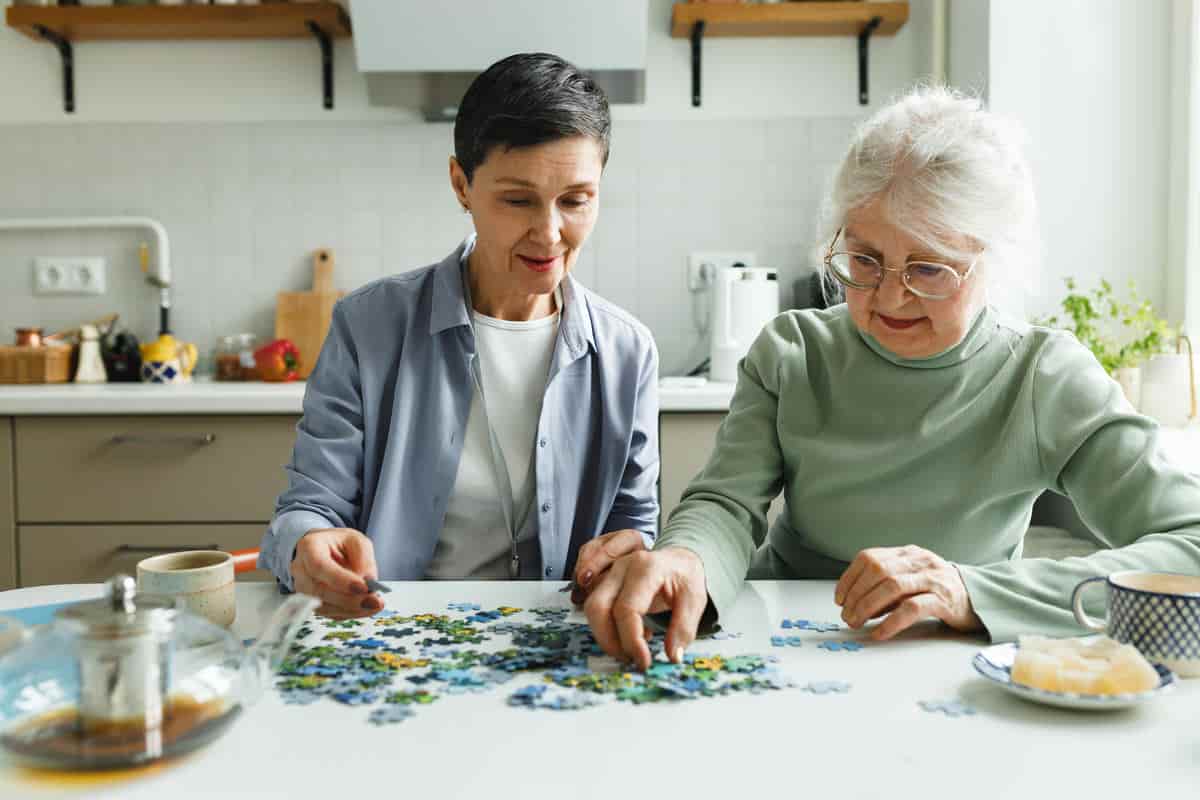
It usually starts small. The garden goes untended for a season. The Tuesday lunch group falls off the calendar and nobody reschedules it. The piano stays closed. A parent who used to fill their own days is suddenly home most of the time, and when you ask what they did this week, the answer is vague.
Most families notice this without quite naming it. It rarely arrives as a crisis, which is exactly why it goes unaddressed for so long.
Withdrawal matters more than it looks. The National Institute on Aging reports that older adults who are lonely or socially isolated tend to be less healthy, have longer hospital stays, are readmitted more often, and are more likely to die earlier than those with meaningful social connection. Feeling lonely is associated with a 31 percent higher risk of dementia across multiple NIA-funded studies.
This guide is about what is usually behind the withdrawal, and what tends to work when you want to help without taking over.
Where we fit: Ciela is a luxury senior living community in Pacific Palisades. Community living solves this structurally, because connection is built into the day rather than something one person has to organize.
Why people stop, and it is rarely loss of interest
When someone gives up an activity they loved, the reason is almost never that they stopped caring about it. Something specific got in the way. Naming that thing is most of the work.
The logistics broke. They stopped driving at night, so the evening book club ended. The friend who used to pick them up moved away. The class moved to a building with stairs.
A sense changed. Hearing loss makes group conversation exhausting rather than enjoyable, so restaurants and gatherings quietly become things to decline. Vision changes make reading, needlework, or cards harder in the same way. This is one of the most common causes and one of the least often identified, because people rarely volunteer it.
The activity got physically harder. Kneeling in the garden. Standing through a full class. Carrying a bag of soil.
They lost the people, not the activity. The bridge group dissolved because two members died. The activity was never the point. The people were.
Something happened that shook their confidence. A fall, a moment of confusion in public, an episode of incontinence away from home. After one bad experience, avoidance sets in quickly and quietly.
Depression. It is common in older adults, frequently missed, and it looks exactly like this. If withdrawal came with changes in sleep, appetite, or mood, it deserves a conversation with a physician rather than a new hobby.
The reason you cannot skip this step: the fix depends entirely on the cause. Suggesting a walking group to someone who is avoiding company because they cannot follow conversation will not work, and it may make them feel worse.
Start with a real conversation, not a plan
The instinct is to arrive with solutions. Try starting with a question instead.
Something like: "You used to love your Thursday group. What happened with that?" Then stop talking. The first answer is often deflection. The second one, if you leave enough silence for it, tends to be the real one.
A few things that help:
- Ask about a specific activity rather than about their life in general
- Do not offer a solution in the same breath as the question
- Resist correcting them if they minimize it
- Let them be the one to say what they miss
What to avoid: framing it as concern about them. "I'm worried you're isolated" puts most people on the defensive immediately, and the conversation becomes about reassuring you rather than about what they actually want.
Adapt what they already love before introducing anything new
This is the part most advice gets backwards. Articles suggest new hobbies. What usually works is making an old one possible again.
Someone who gardened for forty years does not want to try watercolor. They want to garden. The question is what modification lets them.
Gardening. Raised beds and tabletop planters remove kneeling entirely. Containers on a patio work when a full bed does not. Herbs on a windowsill still count. Lightweight tools and shorter sessions extend the years someone can keep doing this.
Reading. Large print, e-readers with adjustable text, and audiobooks. Most public libraries lend audiobooks free through an app, and library staff will walk someone through the setup.
Music. Playing may become difficult, but attending, listening seriously, and teaching a grandchild are all continuations rather than replacements.
Cooking. Pre-chopped ingredients, a stool at the counter, and cooking with someone rather than alone. The social part often matters more than the meal.
Cards and games. Larger cards, better lighting, and smaller groups where hearing is manageable.
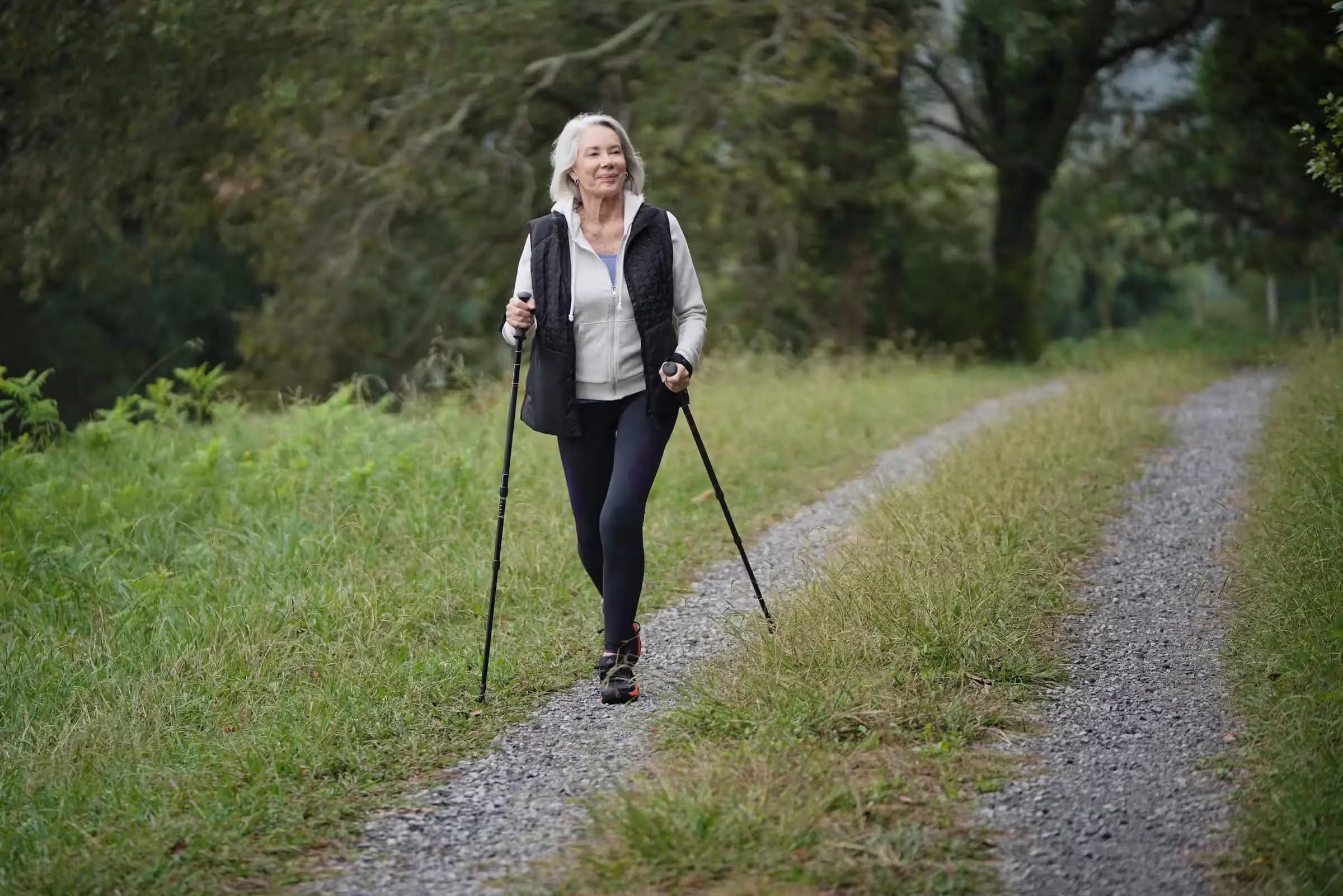
Walking. Distance is not the point. A short flat route with a destination beats a long ambitious one that gets skipped.
The underlying principle: change the conditions, not the interest.
Address hearing and vision first
If hearing loss or vision change is the barrier, no amount of scheduling will fix it, and this is worth handling before anything else.
Untreated hearing loss is one of the most reliable predictors of social withdrawal in older adults. Group settings become work. Following conversation takes concentration that used to be automatic. Declining the invitation is easier than admitting the difficulty.
The same is true of vision. Reading, cards, needlework, and driving all narrow at once, and several activities disappear together.
A hearing test and an eye exam are not exciting recommendations. They are frequently the highest-return thing on this entire list.
Rebuild the social layer, not just the schedule
Someone can be busy and still isolated. Activities alone do not create connection. What tends to work:
Anchor one thing to a specific day. Recurring beats occasional. A standing Tuesday coffee outperforms a vague intention to see friends more.
Attach a person to it. Activities people attend alone are the first to get dropped. Activities where someone would notice their absence stick.
Make the first time easy. Go with them once. Handle the transportation. Most of the resistance is about the first visit, not the activity.
Look for groups built around a shared interest, rather than groups built around age. A garden club, a film series, or a volunteer role gives people something to talk about besides themselves.
Consider volunteering seriously. Contributing something changes how a person sees their own day in a way that being entertained does not. Libraries, schools, animal shelters, and community organizations all take volunteers with flexible schedules.
Transportation deserves its own line, because it is the most common practical barrier and the easiest to solve. When someone stops driving, most of their social life goes with it unless something replaces the driving.
When the barrier is the house itself
Sometimes the problem is not the activity or the person. It is that the setting requires so much upkeep and coordination that nothing else fits.
If a parent's week is consumed by maintaining a house, managing appointments, arranging groceries, and getting themselves places without driving, there is not much left over. Adding a hobby to that does not help.
That is the point at which some families start looking at senior living, not because care is needed but because the logistics have become the whole day. In a community, the meals, transportation, maintenance, and social calendar are handled, and connection stops depending on one person's ability to organize it.
At Ciela, that shows up as a daily social calendar residents help shape, cultural programming and excursions built around what people here actually want to do, and independent living for people who want that ease without daily care support.
What not to do
Do not build them a schedule. Autonomy is the thing being lost. Handing someone a calendar they did not choose reinforces exactly that.
Do not treat busy as the goal. Two things someone looks forward to beat six they attend out of obligation.
Do not push past a clear no. Ask again later, differently. Pressure creates resistance that outlasts the conversation.
Do not assume it is age. Sudden withdrawal is a symptom, not a stage. New confusion, a fall, unmanaged pain, medication side effects, and depression all present this way and all have responses.
When to involve a professional
Some situations call for more than encouragement:
- Withdrawal came on suddenly rather than gradually
- Sleep, appetite, or weight has changed noticeably
- There is new confusion or memory difficulty
- They have expressed hopelessness or said they feel like a burden
- Basic daily tasks are being skipped, including meals, medications, and hygiene
- There has been a fall, or you suspect one they have not mentioned
Start with their primary care physician. Depression in older adults is treatable and frequently missed, and so are the medical and medication issues that mimic it.
If you need help finding local services, the Eldercare Locator is a free national service from the Administration for Community Living that connects families to programs in their area, reachable at 1-800-677-1116.
Frequently asked questions
Why do older adults stop doing activities they used to enjoy? Usually because a specific barrier appeared, not because interest faded. The most common causes are transportation loss, untreated hearing or vision changes, physical difficulty with the activity, losing the friends who made it social, a confidence-shaking event like a fall, and depression. Identifying the specific barrier matters, because the solution depends on it.
How do I get my elderly parent to be more social? Start by asking what happened with something they used to do, and let them answer without offering a fix. Then remove the barrier rather than proposing a new activity. Anchor one thing to a recurring day, attach another person to it, and go with them the first time.
Is social isolation actually dangerous for older adults? Yes. The National Institute on Aging reports that socially isolated and lonely older adults tend to be less healthy, have longer hospital stays, are readmitted more often, and are more likely to die earlier. Loneliness is also associated with a 31 percent higher risk of dementia.
What is the difference between being alone and being isolated? They are not the same. Many older adults live alone and are neither lonely nor isolated, and some people feel deeply lonely surrounded by family. Isolation is about the absence of meaningful contact. Loneliness is about how the person experiences it. Both carry health risk and they require different responses.
My parent says they are fine and does not want help. What now? Take the answer at face value in the moment and stay in contact. Pressure tends to entrench resistance. Keep offering specific, easy, low-commitment options rather than plans, and watch for the signs that warrant a physician's involvement.
Should activities change as someone's abilities change? Adapting is usually better than replacing. Raised beds keep a gardener gardening. Audiobooks keep a reader reading. People stay engaged with interests they have held for decades far more reliably than with new ones introduced from outside.
The point of all this
The goal was never a full calendar. It was a life with things in it worth looking forward to.
For most families, that means finding the specific barrier and removing it. Sometimes it is a hearing aid. Sometimes it is a ride. Sometimes it is one friend and one standing Tuesday.
Ciela in Pacific Palisades, CA, is a boutique luxury senior living community offering independent living, assisted living, memory care, and short term stays. If the effort of staying connected at home has become the whole day, we are glad to talk through whether community living would help. Contact us to arrange a personalized tour.
California RCFE license #198320375



.svg)



