

.svg)



Parkinson's disease is commonly described in five stages using the Hoehn and Yahr scale, which tracks how the disease affects movement and physical independence:
That is the framework. What follows matters just as much: the stages are a communication tool, not a timeline. People move through them at wildly different rates, symptoms overlap, and where someone sits on this scale predicts very little about how long they will be there.
What the Hoehn and Yahr scale actually measures
The scale was published in 1967 and it measures one thing: motor symptoms and physical disability. That is useful, and it is also a narrow slice of the disease.
Clinicians today more often use the MDS-UPDRS, a considerably more detailed assessment covering non-motor symptoms, daily living, motor examination, and treatment complications. If your neurologist has never mentioned a Hoehn and Yahr stage, that is not an oversight. Many movement disorder specialists find the staging too blunt to be clinically useful and rarely reference it.
A modified version of the scale adds half stages at 1.5 and 2.5, which is why you will sometimes see seven numbers rather than five.
Three things worth understanding before reading any further:
Progression varies enormously. Some people remain in early stages for a decade or more. Others progress faster. There is no standard rate, and no way to read a timeline off a stage number.
Symptoms overlap the boundaries. Almost nobody fits neatly into one stage. Someone can have Stage 2 tremor and Stage 3 balance issues at the same time.
The scale ignores most of the disease. Sleep, mood, cognition, pain, blood pressure, digestion, and fatigue are frequently the symptoms people find hardest to live with, and none of them appear on this scale at all.
Before Stage 1: the prodromal period
The first thing worth knowing about the five stages is that they begin after the disease does.
Parkinson's changes the brain years, sometimes decades, before movement symptoms appear. This is called the prodromal period, and four non-motor symptoms are its best-characterized markers:
- Reduced or lost sense of smell. Present in the large majority of people with Parkinson's by the time of diagnosis, and often unnoticed by the person themselves.
- REM sleep behavior disorder, meaning physically acting out dreams: shouting, kicking, punching during sleep. This is among the strongest single predictors of later Parkinson's or a related condition.
- Chronic, unexplained constipation, which can precede diagnosis by many years.
- Depression and anxiety with no clear cause.
None of these on their own means someone will develop Parkinson's. All of them are common in people who never do. The combination is what carries weight, and it is worth mentioning to a physician rather than treating each in isolation.
Stage 1: Symptoms on one side only
What it looks like: Mild symptoms affecting one side of the body. A slight tremor in one hand, some stiffness, a foot that drags a little, or an arm that no longer swings when walking. Handwriting may get smaller. Facial expression may soften.
What life is like: Usually largely unchanged. Symptoms are mild enough that they often go unnoticed by everyone but close family, and are frequently attributed to normal aging or stress.
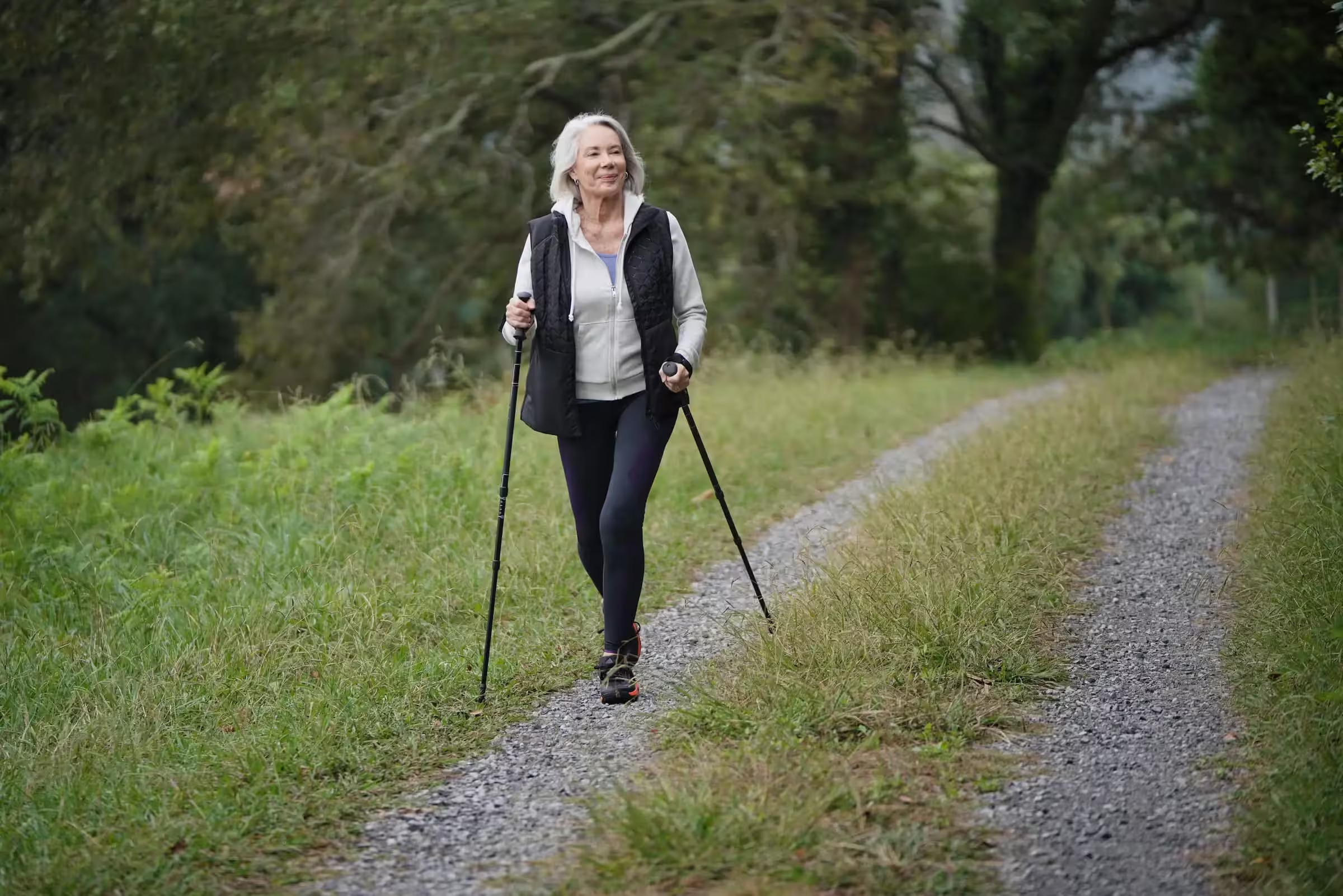
What matters most here: Getting an accurate diagnosis, ideally from a movement disorder specialist, and starting exercise. The evidence that regular vigorous exercise affects the course of the disease is among the strongest we have, and starting early is better than starting later.
Modified stage 1.5 adds involvement of the midline: neck, trunk, or posture.
Stage 2: Both sides affected, balance intact
What it looks like: Symptoms now appear on both sides of the body. Tremor, rigidity, and slowness are more evident. Walking may slow, posture may stoop, speech may quieten, and facial expression may become noticeably reduced.
What life is like: Daily tasks take longer, sometimes considerably longer. Most people remain independent and continue working, driving, and living alone. Balance is still normal, which is the defining feature of this stage.
What matters most here: Medication is usually established or being adjusted. This is also the point where physical therapy, speech therapy, and structured exercise pay real dividends. Voice work in particular is more effective started early than after speech has significantly declined.
Modified stage 2.5 marks mild bilateral disease with recovery on the pull test, a balance assessment where the clinician pulls the person backward by the shoulders.
Stage 3: Balance is affected
What it looks like: Postural instability appears. The person may lose balance when pushed, turn more slowly, or experience freezing of gait, a sudden inability to start walking or continue through a doorway. Falls begin.
What life is like: This is the stage many families identify as the turning point. Most people remain physically independent and can still live alone, but activities become harder and risk becomes a real consideration.
What matters most here:
- Fall prevention. Home hazard assessment, physical therapy focused on balance and gait, and appropriate footwear.
- Medication timing becomes more important as the effect of each dose becomes more noticeable.
- Driving should be evaluated honestly at some point during this stage.
- The practical and legal paperwork, including advance directives and powers of attorney, is far easier to handle now than later.
Stage 4: Severe symptoms, still able to stand
What it looks like: Symptoms are severe and significantly limiting. The person can still stand and walk unassisted, at least short distances, but usually needs a walker or someone alongside. They generally cannot live alone safely.
What life is like: Help is needed with many daily activities. Non-motor symptoms often become more prominent, including cognitive changes, hallucinations, blood pressure drops on standing, and swallowing difficulty.
What matters most here:
- Twenty-four hour availability of help, whether family, in-home caregivers, or a residential community.
- A swallowing assessment by a speech language pathologist if there is any coughing at meals or wet-sounding voice afterward.
- Palliative care, which many families do not realize is available at this point and which is not the same as hospice.
- Caregiver support, before exhaustion rather than after.
Stage 5: Full-time care
What it looks like: The person cannot stand or walk without physical assistance from another person. They use a wheelchair or are largely bedbound. Most or all daily activities require help.
What life is like: Full-time care is necessary. Speech may be very limited, swallowing is frequently affected, and cognitive changes are common.
What matters most here: Swallowing safety, medication timing, comfort, and support for the caregiver. Stage 5 also corresponds to one of the general criteria used for hospice eligibility in Parkinson's, which many families are not told.
We cover this stage in detail, including the medication safety issues that cause preventable harm during hospital stays, in our guide to Stage 5 Parkinson's for families and caregivers.
What the stages do not tell you
They do not predict life expectancy. Many people with Parkinson's live a normal or near-normal lifespan, and a stage number is not a prognosis. If this is the question your family is actually asking, the honest answer depends on the individual and belongs with their neurologist rather than a website.
They do not capture non-motor symptoms, which are frequently what people find hardest. Sleep disruption, depression, anxiety, fatigue, pain, constipation, blood pressure changes, and cognitive change are largely invisible to this scale.
They do not account for treatment. Someone whose medication is well optimized may function considerably better than the stage suggests. The scale describes the disease, not the person's actual day.
They do not move in one direction only. A good day and a bad day can look like different stages. An infection, a medication change, dehydration, or poor sleep can all cause temporary decline that resolves.
That last point is worth holding onto. If someone declines suddenly, do not assume progression. Sudden change usually has a cause, and the cause is often treatable.
What helps at every stage
A few things matter regardless of where someone is on the scale:
Exercise. The evidence here is genuinely strong, and it holds across the disease course. Type matters less than consistency and intensity.
A movement disorder specialist, rather than a general neurologist, when one is accessible. Parkinson's management is specialized and the difference in care quality is real.
Medication timing. Parkinson's medications are time-critical in a way most medications are not. Late doses have consequences.
Physical, occupational, and speech therapy, which are underused at every stage and most effective when started before a problem is severe.
Naming non-motor symptoms out loud. Constipation, sleep, mood, and pain are treatable and frequently go unmentioned in appointments focused on movement.
Support for the care partner, who is managing a chronic illness alongside the person diagnosed with it.
Frequently asked questions
What are the 5 stages of Parkinson's disease? The Hoehn and Yahr scale defines five stages. Stage 1 involves mild symptoms on one side of the body. Stage 2 involves symptoms on both sides with balance intact. Stage 3 adds balance impairment while the person remains physically independent. Stage 4 involves severe disability with the person still able to stand and walk unassisted. Stage 5 means being wheelchair-bound or bedridden unless assisted, requiring full-time care.
How fast does Parkinson's progress through the stages? There is no standard rate. Progression varies enormously between individuals, and some people remain in early stages for a decade or more while others progress faster. The stage number does not indicate how long someone has had the disease or how long they will remain at that stage.
What stage of Parkinson's is considered advanced? Stages 4 and 5 are generally considered advanced. Stage 4 involves severe disability with the person still able to stand and walk unassisted, while Stage 5 means being wheelchair-bound or bedridden and requiring full-time care.
Does everyone with Parkinson's reach Stage 5? No. Progression varies significantly, and many people never reach the most advanced stage. Some remain in earlier stages for many years, and other health conditions may become more significant than Parkinson's itself.
What are the earliest signs of Parkinson's? Non-motor symptoms often precede movement symptoms by years or decades. The best-characterized are reduced or lost sense of smell, REM sleep behavior disorder where a person physically acts out dreams, chronic unexplained constipation, and depression or anxiety without clear cause. None is conclusive alone, but the combination warrants evaluation.
Do the stages ever go backward? The disease itself is progressive, but function fluctuates. Medication adjustments, exercise, and therapy can improve function noticeably. Sudden decline often has a treatable cause such as infection, dehydration, or a medication problem, rather than representing genuine progression.
Is the Hoehn and Yahr scale still used? It is still widely referenced, particularly in research and for general communication, but many clinicians now prefer the MDS-UPDRS, which assesses non-motor symptoms, daily living, motor function, and treatment complications in far more detail.
Parkinson's support at Ciela
Our Parkinson's program is built around what actually helps across the disease course: consistent, supervised movement. Residents work with physical therapists at our Vitality Center, which includes a hydrotherapy pool with an underwater treadmill, alongside yoga, balance work, and cognitive exercise.
For residents who need daily support, assisted living provides help with medication management, personal care, and mobility while keeping as much independence as possible. Because Parkinson's needs change over time, it is worth understanding what a community can and cannot provide before you need it. We are glad to have that conversation honestly, including telling you if a different setting would serve your family better.
Ciela in Pacific Palisades, CA, is a boutique luxury senior living community offering independent living, assisted living, memory care, and short term stays. Contact us to arrange a personalized tour.
This article is general information and not medical advice. Parkinson's staging, treatment, and care decisions should be made with a neurologist or movement disorder specialist.
California RCFE license #198320375






.svg)



