.svg)



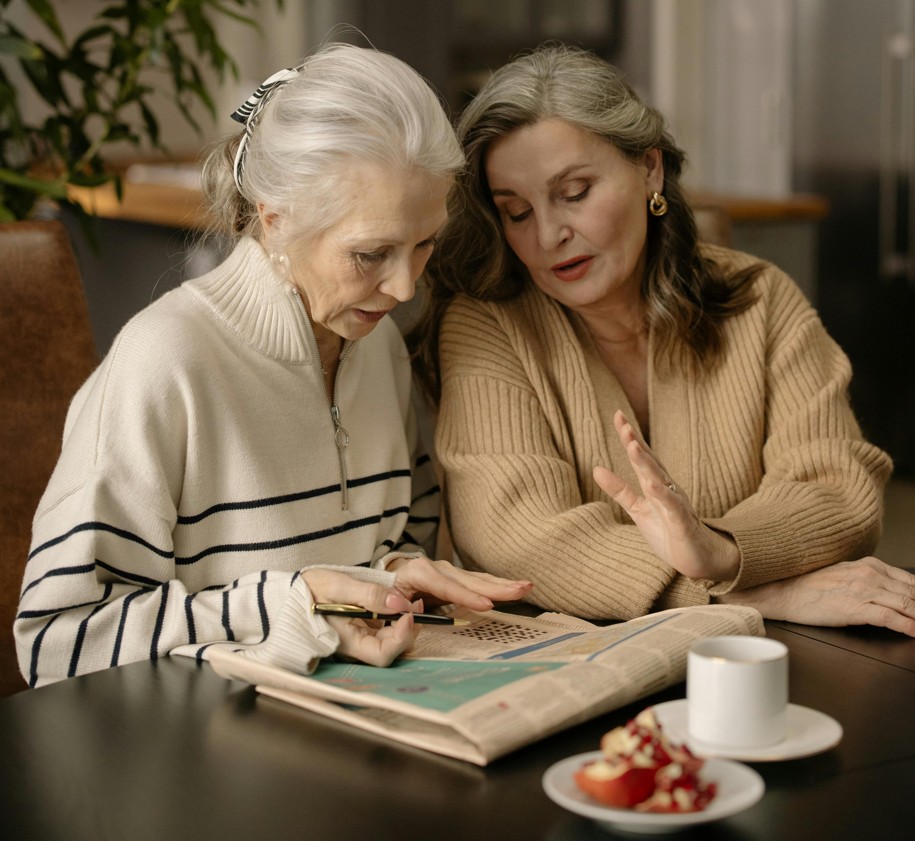
A few years ago, a family member brought their 80-year-old father to a doctor's appointment. The physician spent the entire visit making eye contact with the adult child, directing every question to her rather than to the patient sitting right there in front of him.
Her father, who was still doing real estate appraisals and playing eighteen holes of golf at the time, sat largely ignored.
That's ageism. Not a slur. Not a policy. Just a quiet, routine dismissal of someone based on how old he appeared to be. And it happens every single day, in ways most of us don't catch, including ways we participate in ourselves.
What Ageism Actually Means
The World Health Organization defines ageism as stereotypes, prejudice, and discrimination directed at people based on their age. It shows up in institutions, in policies, in media, and in everyday interactions that most people never think twice about.
It can technically apply to any age group. But when it comes to older adults, ageism is particularly pervasive, particularly damaging, and for some reason, widely accepted as normal.
What makes it unusual among forms of bias is this: it's a prejudice against our future selves. Most of us, if we're lucky, will eventually be old. That reality doesn't seem to slow ageism down much.
How Widespread Is It?
Widespread enough that most older adults experience it regularly without labeling it.
A national poll found that 82% of adults ages 50 to 80 encounter at least one form of everyday ageism on a consistent basis. The American Society on Aging reports that 64% of older workers believe they've faced age discrimination professionally, and 41% say they've experienced it directly.
A 2025 study published in Nature found that even subtle age-based discrimination in healthcare settings produced measurable physiological stress responses in older patients, responses that were directly linked to worse health outcomes over time.
The numbers are striking. What's more striking is how little any of this registers as a problem worth addressing.
What It Looks Like in Real Life
Most ageism isn't loud. It doesn't announce itself. It shows up in small, forgettable moments that accumulate into something much larger over time.
- Talking to a senior's adult child instead of the senior themselves
- Using terms like "sweetie" or "honey" with older adults in ways you never would with a younger person
- Assuming someone can't handle technology, make their own decisions, or follow a complex conversation
- Dismissing a health complaint as "just part of getting older" without actually investigating it
- Birthday cards and jokes built around the premise that aging is something to be embarrassed about
- Genuine surprise when an older adult is sharp, funny, physically capable, or still professionally active
That last one deserves a pause. When we express surprise that an older person is competent, we're revealing an assumption that incompetence was the expectation. That assumption is ageism, even when it's well-intentioned.
The Health Consequences Are Measurable
This isn't a philosophical problem. It has direct, documented health consequences.
A landmark review of 422 studies across 45 countries found that ageism was associated with worse outcomes across a wide range of physical and mental health conditions. Ten studies within that review found that older adults who had internalized negative cultural messages about aging had shorter life expectancies than those who hadn't.
The World Health Organization connects ageism to increased social isolation, reduced quality of life, greater financial insecurity, and premature death. The American Society on Aging estimated it generated $63 billion in excess healthcare costs in a single year, mostly from undertreated conditions and care that was minimized or withheld based on age-based assumptions.
When older adults experience ageism from a doctor or a healthcare system, they become less likely to seek follow-up care, less likely to follow treatment plans, and more likely to delay addressing problems until they become serious. A single dismissive encounter erodes trust in ways that have lasting consequences.
What Internalized Ageism Does
Here's a dimension of this that doesn't get enough attention.
Ageism that comes from outside is harmful. But ageism that gets internalized, that an older person starts to believe about themselves, is its own problem with its own documented effects.
When older adults absorb the cultural message that decline is inevitable, that their best years are behind them, that they're less capable or less relevant than they used to be, and when they start to believe it, research shows they perform worse on cognitive tests, recover more slowly from illness, and live shorter lives.
The birthday jokes matter. The "over the hill" framing matters. The commercials for anti-aging products matter. They're not neutral. They contribute to a cultural backdrop that tells older people what to expect of themselves, and some of them listen.
What This Means at Ciela
We think about this with some regularity.
Ciela was built on the belief that this stage of life deserves to be lived fully, on the resident's own terms, with genuine dignity. That's not a marketing line. It shapes how our team communicates, how we design our wellness programming, and how we think about the people who live here.
We don't say "still sharp." We don't react with surprise when a resident is funny or capable or has opinions about things. We don't build our programming around managing decline. We build it around what the research says actually keeps people mentally engaged, physically capable, and socially connected, because those things don't stop mattering at any particular age.
Senior living communities have a real opportunity here. The environment we create either reinforces ageism or pushes back against it. We know which side of that we want to be on.
What Any of Us Can Do
You don't need to work in senior care to make a difference here.
Direct your conversation to the person in front of you. Not their adult child. Not their caregiver. The person. Let them speak for themselves.
Notice the language you use. Terms of endearment aimed at older adults that you'd never use with a 40-year-old aren't affectionate. They're condescending, even when that's not the intent.
Catch your own assumptions. When you feel surprised that an older person is capable of something, sit with that for a moment. That surprise is information about your own biases.
Push back gently when you can. When someone makes an aging joke or speaks over an older person in a medical setting, a calm, quiet redirect is enough. Most people aren't being malicious. They just haven't thought about it.
Talk about aging honestly. Aging is not a departure from real life. It is real life. Treating it as a tragedy or a problem to be delayed as long as possible contributes to the cultural narrative that makes ageism feel unremarkable.
Getting Older Is Not the Problem
We've built a culture that treats youth as the goal and aging as the slow retreat from it. That framing is baked into advertising, language, medicine, and the stories we tell about who is worth listening to.
The research is unambiguous that this framing causes harm. It's also just wrong.
The people we care for at Ciela have built careers, families, businesses, and communities over the course of their lives. They have things to say and ways of engaging with the world that deserve to be honored, not treated as a footnote to the years when they were younger. Our memory care team holds this belief just as closely as everyone else here, because cognitive change doesn't diminish a person's worth or their right to be treated with respect.
Changing how we think about aging starts with noticing how we're currently thinking about it. That's harder than it sounds. Most of the bias is invisible, which is exactly what makes it so persistent.
If you're looking for a senior living community built on genuine respect for older adults, we'd be glad to show you what that looks like in person.
Schedule a Private Tour
Learn About Our Approach
Explore Memory Care at Ciela